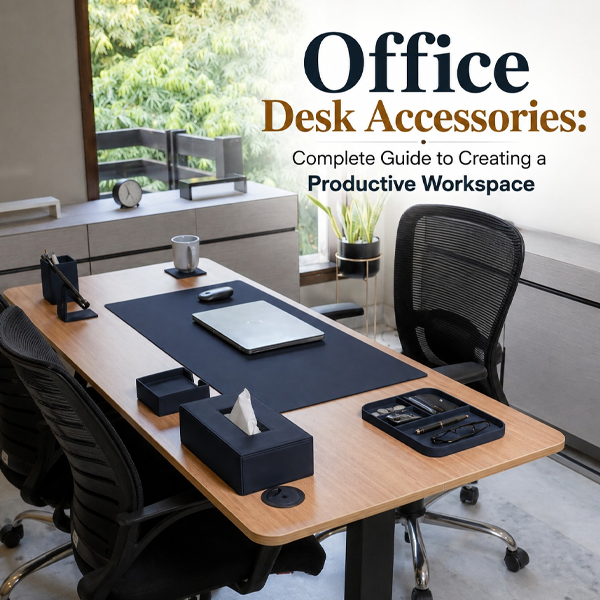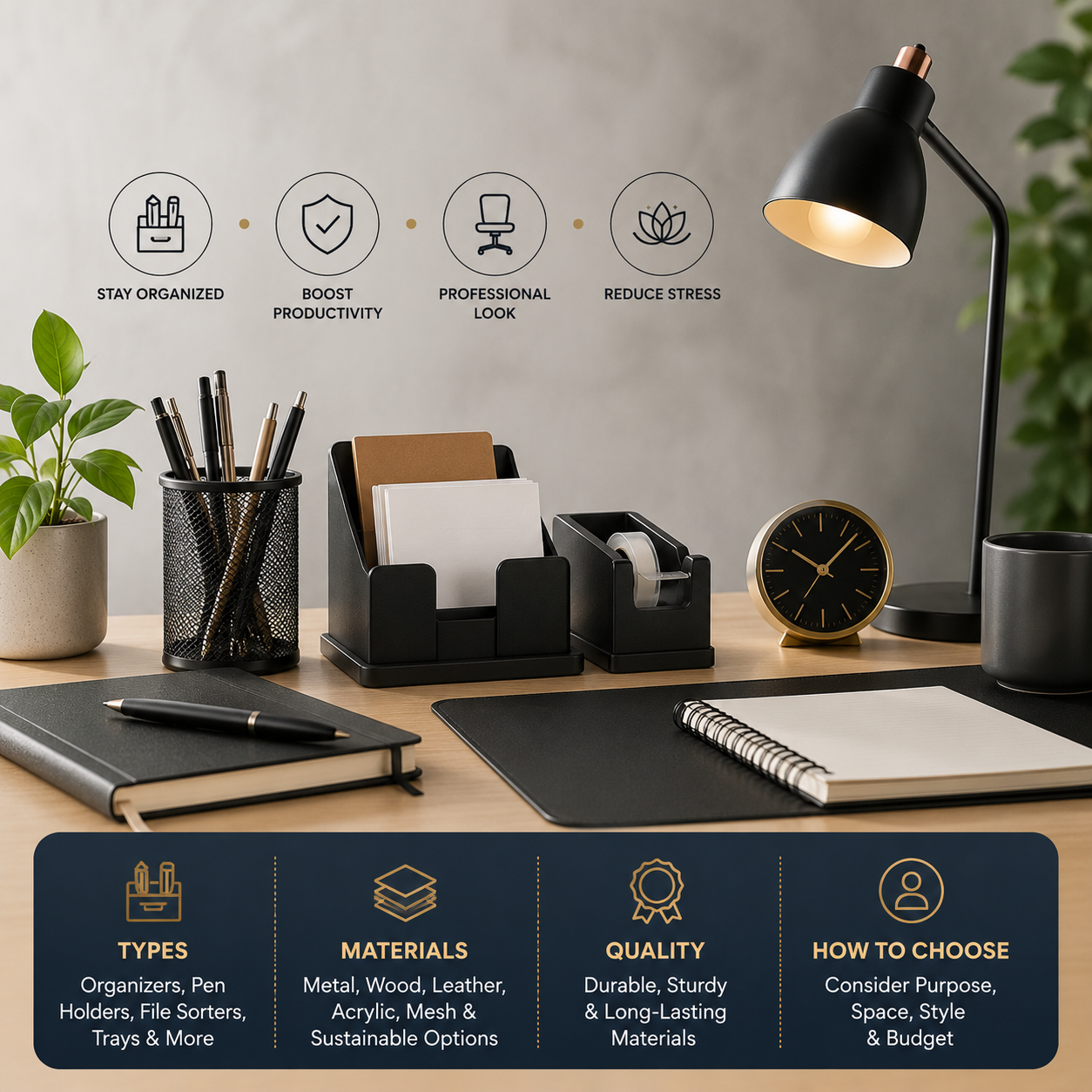
Office Desk Accessories Buying Guide: Types, Materials & How to Choose
Honestly, it comes down to what's actually bugging you. Bare desk driving you nuts? Get a mat. Pens disappearing into a drawer? Grab a holder. Cables everywhere? Fix that first, before anything else - that's the real starting point for any office desk accessories purchase. Material-wise, faux leather holds up better than people expect, wood looks nice but hates liquids near it, and cheap plastic cracks way faster than you'd think. Measure your desk before buying anything big, don't go buying five different colors either. You really don't need a full set of office desk accessories on day one, one or two pieces usually fixes most of the annoyance already.
Why Office Desk Accessories Actually Matter
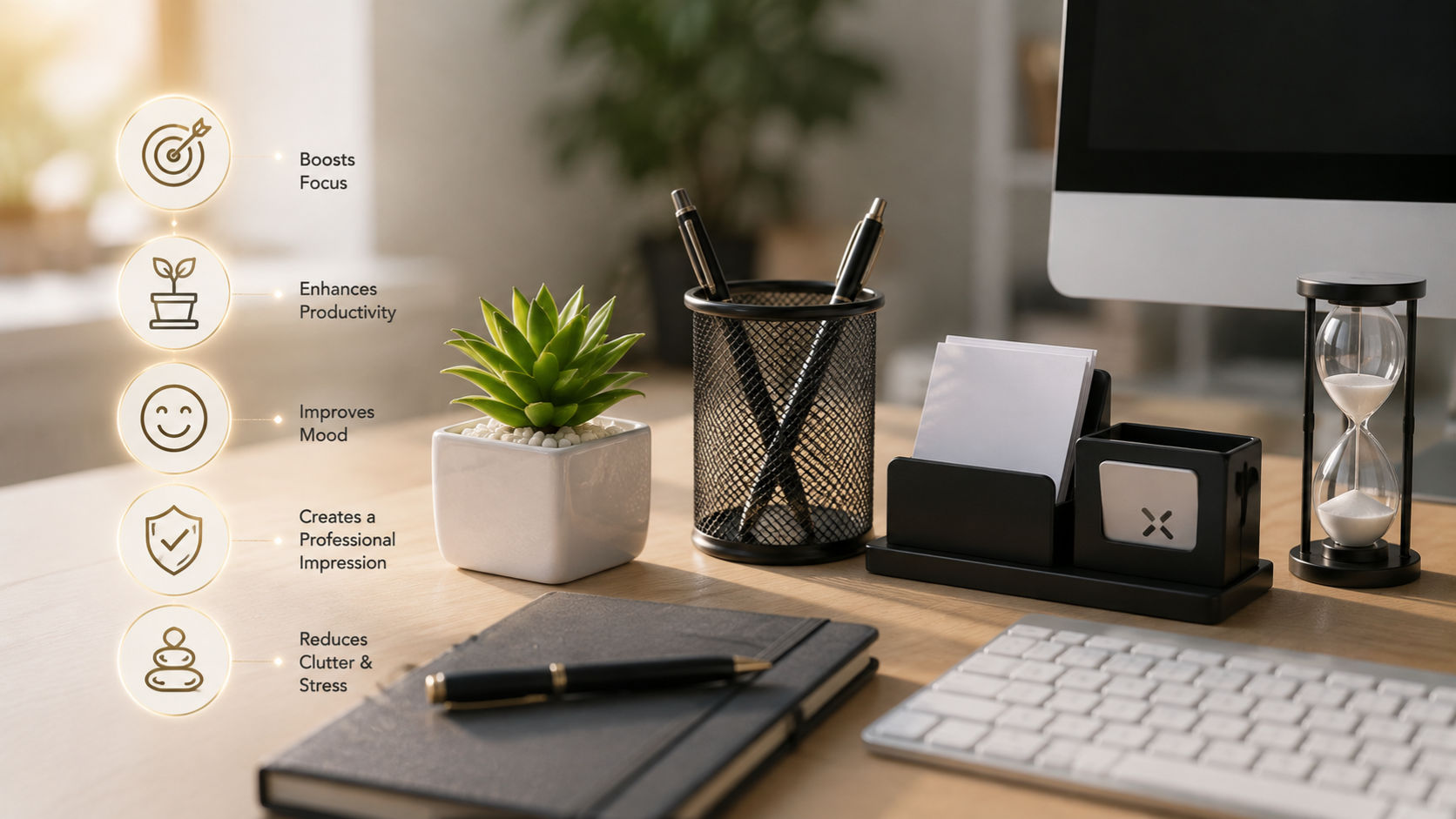
Easy to write these off as decoration. They're not, really. A proper desk mat protects the surface and gives your mouse a smoother glide. A pen holder means you're not digging through a drawer mid-call. Cable organizers stop you from unplugging the wrong thing by accident. None of it is glamorous, but the right office desk accessories quietly remove a dozen small frictions from your day, and somehow that adds up more than you'd think.
There's a focus angle too, one people don't usually connect to this stuff A cluttered desk distracts you in little ways all the time even when you don’t notice it consciously. Clean the surface up with the right office accessories and a good chunk of that background noise just goes away.
Types of Office Desk Accessories to Know About
Of course, not all desks require an identical set-up, but generally, people will select from a pretty consistent range of office supplies and office furniture. Here’s the list:
- Desk mats - protect the surface, define your workspace, make mouse movement smoother than bare wood or laminate.
- Mouse pads - smaller, more portable than a full mat, good for tighter setups.
- Pen and stationery holders - keep the small stuff from vanishing into drawers forever.
- Valet trays - somewhere for keys, wallet, watch, whatever ends up loose in your pockets.
- Cable organizers - unglamorous, but genuinely useful the second your setup has more than one device plugged in.
- Tissue and coaster sets - small additions, but they round out a proper computer desk accessories setup nicely.
- Desk organizers - trays, dividers, stands for files, notebooks, everyday supplies.
Put a handful of these together and, without really trying, you've built yourself an office table accessories set.
Materials Worth Paying Attention To
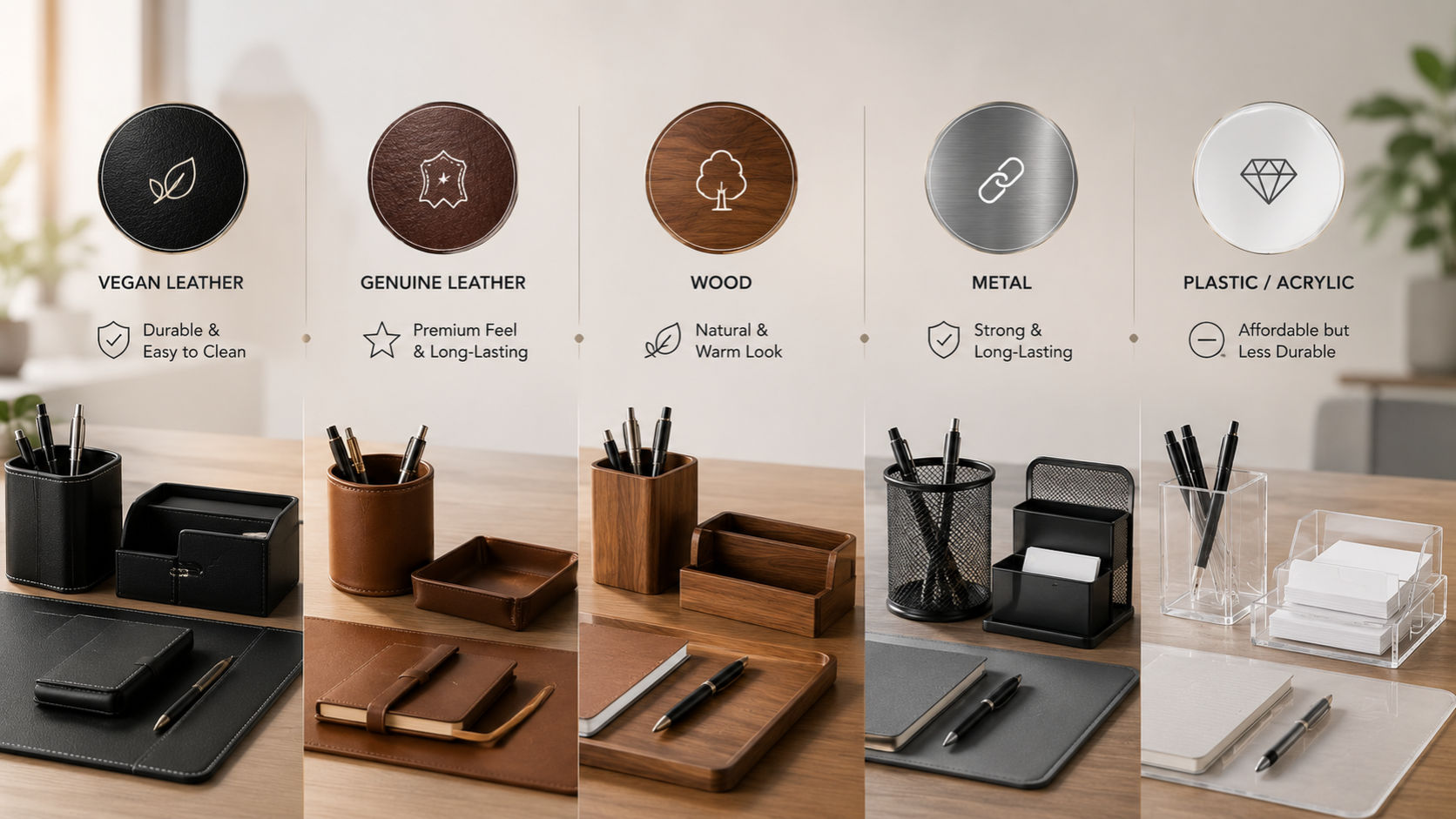
This is where a lot of office desk items fall apart. Literally. Cheap plastic organizers crack within months. Thin mats curl at the edges faster than you'd expect.
- Vegan or faux leather - durable, easy to wipe down, ages well instead of looking worn after a few weeks. Most of our own desk accessories are built from this for exactly that reason.
- Genuine leather - premium feel, but it needs more care and usually costs a fair bit more.
- Wood - great for pen holders and trays, adds warmth to a desk setup, though not exactly ideal near liquids.
- Metal - holds up well for smaller organizers, can feel a bit cold or clinical if you use too much of it.
- Plastic or acrylic - cheap, fine for basic desk setup accessories, but usually the first material to crack or discolor.
If you're buying office table accessories meant to last years instead of months, material is honestly the first thing worth checking, before color or style even enters the conversation.
How to Choose the Right Office Desk Accessories
With so many computer desk accessories and computer table accessories out there, it helps to narrow things down with a few real questions instead of just buying whatever looks good in a product photo.
- Start with your desk size. A huge mat on a small desk just becomes clutter itself. Measure first, then shop, not the other way around.
- Think about your actual daily habits. Constantly on video calls? A clean mat and a mobile holder probably matter more than a five-piece organizer set. Handle a lot of paperwork? Storage-focused office desk items should come first on your list.
- Try to keep a consistent look. An incongruous combination of color and materials seems to defeat the purpose of having a upgrade in the first place. The reason why most executive desk accessories are sold as matched sets is precisely because of this same reason.
- Don't skip maintenance. Some materials need more upkeep than others, and it's worth being honest with yourself about how much you'll actually do. Faux leather and metal are the easier long-term picks if you don't want a care routine hanging over your head - unsealed wood and bright fabric ask more of you.
- Set a realistic budget. You really don't need everything on day one. A desk mat and one organizer cover most of the daily friction already - the rest of your office table accessories can get added later, once you know what you actually reach for.
A Few Underrated Picks
Some of the most useful office desk accessories aren't the ones people think to buy first.
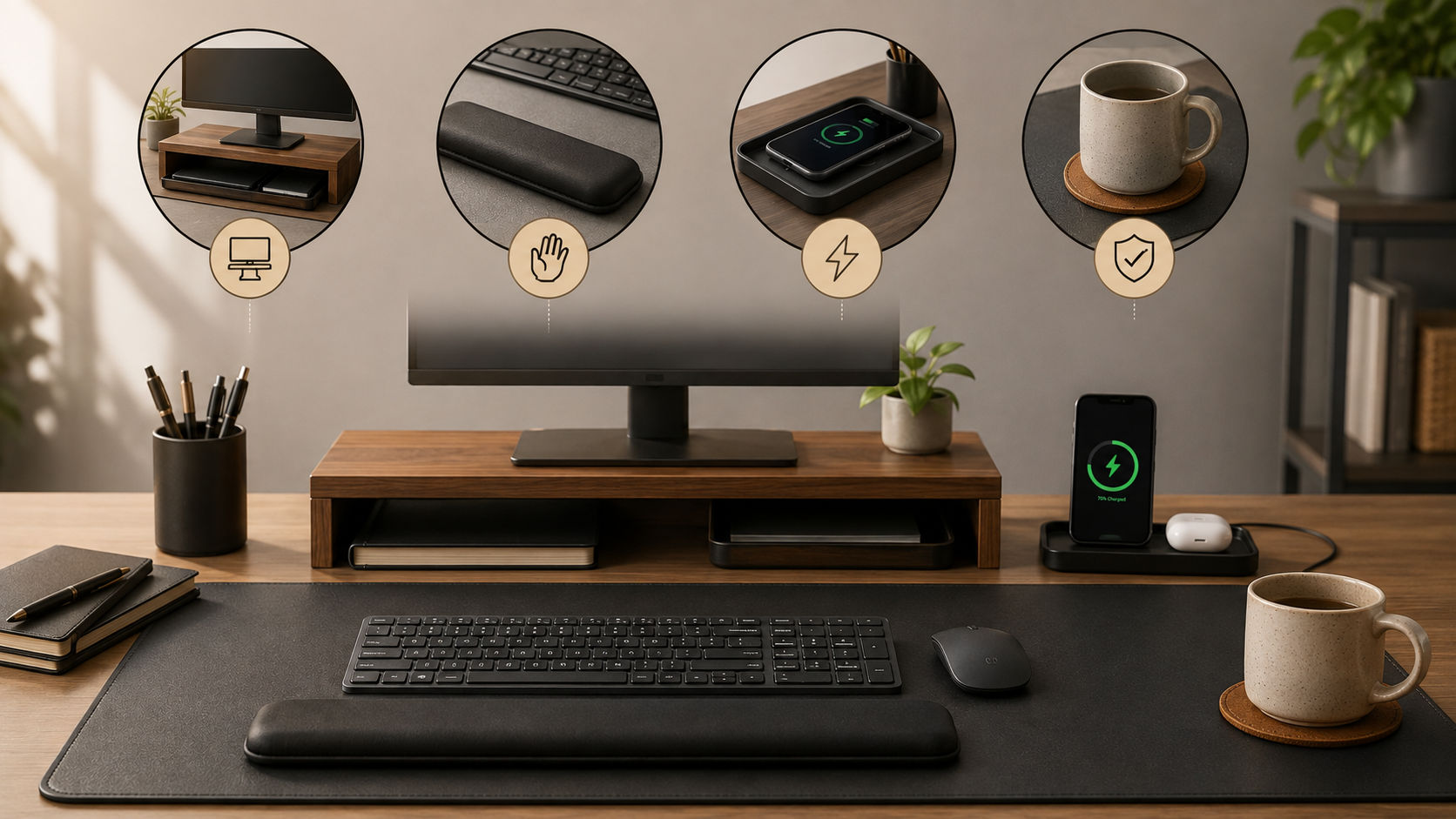
- Monitor stands - free up drawer space underneath, improve posture without you even trying.
- Wrist rests - small, cheap, genuinely helpful if you're typing for hours straight.
- Charging trays - keep your phone off the main desk surface and charged at the same time.
- Coasters - protect the mat itself from water rings, which matters way more than people expect once they've actually spent money on a good one.
None of these make the typical "essentials" list, but they solve problems most people don't notice until they've already lived with them for months.
Conclusion
You don't need to overhaul the whole desk in one order. Start with one or two office desk accessories that solve your single most annoying daily problem - a bare surface, tangled cables, nowhere to put your keys down, whatever it is for you. Build out from there into a setup that actually matches how you work, not just how a desk looks in someone else's photo. Good desk accessories tend to disappear into the background of your day. You really only notice them on the one day you don't have them.
Frequently Asked Questions
Q1: What should I actually buy first? ▼
Honestly, just a desk mat and something to hold your pens. Covers most of the annoying stuff right away.
Q2: Which material actually lasts? ▼
Faux leather, surprisingly. Plastic cracks way faster than people expect, and thin fabric mats curl at the edges within weeks.
Q3: How big should my desk mat be? ▼
Depends on your desk, obviously - measure first. A huge mat on a small desk just becomes more clutter, not less.
Q4: Does everything need to match? ▼
Not perfectly, but if you're buying five different colors you're kind of defeating the point. Keep it to one or two.
Q5: Do I need the whole set on day one? ▼
No, honestly. One good mat plus an organizer fixes most of the problem already, add the rest later if you actually need it.